
How generative AI is replacing slow, expensive production pipelines — the full AI filmmaking process, the tools, and how brands and agencies are using it to scale premium content.
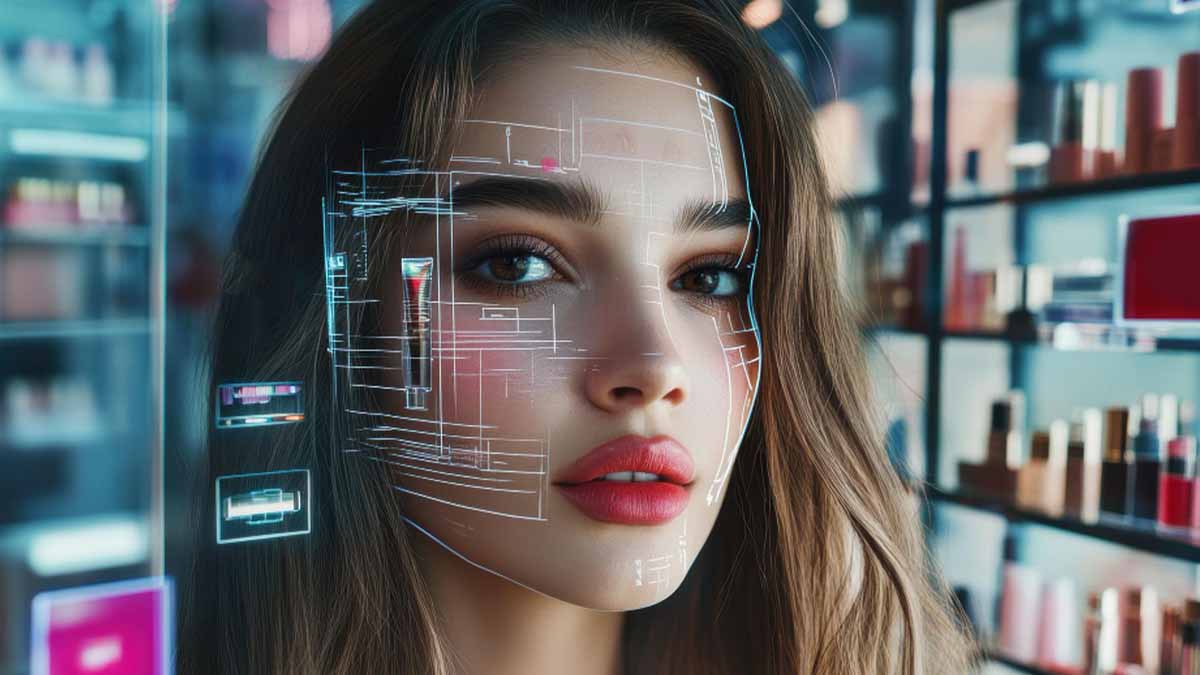
AI filmmaking uses generative models to create video, audio, and animation from text prompts — cutting the cost and time of traditional production while enabling limitless creative concepts. The pipeline runs in three phases: pre-production (AI script & shot design), production (text-to-video & animation), and post-production (voice-over, lip-sync, music & mastering).
For a century, filmmaking meant cameras, crews, locations, and long post-production schedules. That model still produces beautiful work — but it is slow and expensive, and in a digital ecosystem where attention is the scarcest currency, brands need premium content in volume, fast. Generative AI has changed the economics entirely.
The savings begin in pre-production. Where scripting, storyboarding, and concept art once took weeks of specialist time, AI now generates first drafts in hours. A logline becomes a formatted screenplay; a written scene becomes a storyboard; a mood becomes a library of concept frames. That speed compounds across the whole project.
In production, the change is even more dramatic. Text-to-video models generate footage that would otherwise require a location, a crew, and a shoot day — a futuristic skyline, an underwater sequence, a product in an impossible environment — in the time it takes to refine a prompt. The cost of "impossible" shots collapses, and creative ambition stops being limited by budget.
A professional AI production is not a single button-press. It is a structured pipeline, and understanding the three phases is the key to broadcast-grade results.
Everything starts with story. Large language models turn a brief or logline into a fully formatted screenplay — scene structure, character arcs, and story beats mapped out. AI direction then translates that script into a visual language the models can render: shot design, camera language (focal lengths, lighting, tracking moves), and scene-by-scene direction written specifically for algorithms to interpret accurately.
With the plan set, generation begins. Text-to-video and image-to-video models — Sora-class tools, Runway ML, Veo-3, and Kling AI — produce high-fidelity footage, complex camera movements, and photorealistic environments. In parallel, 2D and 3D AI animation handles character work, with AI managing in-betweening, motion mapping, and texture generation on top of real foundational craft. Consistency of character identity and visual aesthetic across hundreds of shots is where studio expertise separates professional work from raw output.
Audio is half the experience. AI voice-over tools like ElevenLabs deliver studio-grade narration and custom character voices in multiple languages, while frame-accurate lip-sync matches speech to on-screen characters convincingly. Original, royalty-free music and score are generated to the emotional beats of the edit. Finally, every asset is refined through professional VFX and compositing in After Effects, with colour grading and mastering in DaVinci Resolve — the step that guarantees commercial viability.
High-converting, psychologically optimised ad films — dynamically cropped for social feeds, digital billboards, and TV. Brands can test multiple creative directions affordably and scale the winners, rather than betting an entire budget on a single shoot.
AI-assisted research, narrative structuring, and data visualisation make non-fiction and explainer content faster to produce — ideal for education, internal communications, and thought-leadership.
Episodic content structured for OTT platforms and YouTube, with consistent characters and worlds across episodes — a format that was previously out of reach for all but the largest budgets.
The difference between a viral experiment and commercial-grade content is the finishing. Boxfy AI pairs generative tools — Midjourney and Adobe Firefly for concept art, Veo-3 and Runway ML for motion — with traditional heavyweights: Autodesk Maya and Blender for 3D, Unreal Engine for real-time rendering, Premiere Pro and After Effects for compositing, and DaVinci Resolve for grading. Generative AI acquires the raw material; professional craft turns it into something a brand can broadcast.
This hybrid approach matters because raw generative output still carries tell-tale artefacts — inconsistent lighting between shots, warped hands, flickering textures, and continuity errors across a sequence. A studio workflow catches and corrects these systematically: reference sheets lock character identity, colour pipelines unify the look, and manual compositing fixes the frames AI gets wrong. The audience never sees the seams, which is exactly the point.
Three forces have converged to make this the year AI video moves from novelty to necessity. First, model quality crossed a threshold: the latest text-to-video systems produce coherent motion, stable characters, and controllable camera language that simply did not exist eighteen months ago. Second, distribution shifted — short-form vertical video now drives discovery on every major platform, and the volume of content brands must produce to stay visible has outpaced what traditional production can supply. Third, buyers changed how they search. Increasingly, decision-makers ask AI assistants like ChatGPT, Gemini, and Perplexity to recommend a production partner, which means studios that publish clear, structured, authoritative content get discovered in ways a portfolio reel alone never could.
For Indian businesses specifically, the timing is favourable. Production talent and creative direction are world-class and cost-competitive, and a generative pipeline multiplies that advantage — letting a Chandigarh studio deliver globally competitive work at a fraction of Western agency rates, without the logistical overhead of a physical shoot.
AI is not a wholesale replacement for every kind of filmmaking. Live-action still wins for performances that hinge on a specific human actor, for documentary footage of real events, and for productions where physical authenticity is the point. Where AI decisively wins is speed, cost, and creative scope: concept films, product visualisation, stylised animation, impossible or fantastical environments, high-volume ad variations, and rapid iteration on a creative direction before committing budget.
The smartest teams treat the two as complementary. They use AI to explore concepts, generate variations, and produce the majority of digital content, and reserve traditional shoots for the moments where a real human performance or location is irreplaceable. That blended model delivers both efficiency and authenticity.
If you are considering AI video for your brand, start with a single, well-defined project — a product launch film, a founder story, or a campaign of social ad variations. A focused first project lets you experience the pipeline, judge the quality, and build the internal confidence to scale. Look for a partner that owns the full pipeline (not just prompt generation), can show finished commercial work, and treats generative tools as one part of a professional post-production process rather than the whole of it.
The most common question brands ask is simple: how much cheaper is it? The honest answer is that AI production removes entire cost categories rather than shaving a percentage off each one. There is no location fee, no equipment rental, no travel or catering for a crew, and no reshoot cost when a client changes direction late. A concept that would demand a full shoot day — with the coordination and budget that implies — can instead be generated and refined in a fraction of the time. The saving is not marginal; it is structural, which is why teams can produce a month of content for what a single traditional shoot once cost.
The second saving is speed, and speed is its own form of ROI. When you can test five creative directions in the time it used to take to plan one, you learn faster, scale the winner sooner, and stop pouring budget into ideas that were never going to convert. For performance marketers running paid campaigns across India, the UAE, and the UK, that iteration speed compounds directly into lower cost-per-acquisition.
Not every "AI video" provider is equal, and the difference shows on screen. When you evaluate a studio, look past the demo reel and ask three questions. First: do they own the full pipeline, or only generate raw clips? A studio that stops at prompt output leaves you with the artefacts — the finishing is where quality lives. Second: can they show finished commercial work, not just experiments? Broadcast-grade output requires professional colour grading, compositing, and sound, and a serious studio will demonstrate it. Third: do they understand your market? A Chandigarh-based team that produces for India, Dubai, and the UK should localise language, pacing, and cultural cues — not hand you generic content that works nowhere in particular.
Boxfy AI was built to answer all three. We own the pipeline end to end, finish every asset to commercial standard, and localise for the markets our clients actually sell into. That combination — generative speed, professional finishing, and market fluency — is what turns AI video from a novelty into a reliable growth channel.
AI video production typically costs a fraction of traditional live-action — there are no location, crew, or equipment-rental costs, and revisions are faster. Exact pricing depends on length, complexity, and finishing, but generative pipelines routinely cut both budget and timeline dramatically.
Yes, when it's professionally finished. Raw AI output is a starting point; Boxfy AI refines every asset through VFX and colour grading in tools like After Effects and DaVinci Resolve so the final master meets broadcast standards.
The AI filmmaking pipeline has three phases: pre-production (AI script, screenplay, and shot design), production (text-to-video generation and 2D/3D animation), and post-production (AI voice-over, lip-sync, music, and final mastering).
Contact the Boxfy AI studio in Chandigarh to get started — from a single ad film to a full-scale digital campaign.
Talk to the StudioThe generative platforms our studio works across — matched to each project, then finished with professional post-production for broadcast-grade results.
Tool names are trademarks of their respective owners. Boxfy AI is an independent studio and selects the best tool per project.
The research labs and platforms defining what generative video can do — the foundation models our pipeline builds on.
Sora-class text-to-video with strong spatial consistency for extended, photorealistic takes.
Gen-3 generative video suite with motion brushes, camera controls, and multi-scene consistency.
Veo models with cinematic prompt understanding and realistic physical motion.
High-resolution 4K generation with steerable camera and multi-shot storyboard modes.
Dream Machine's Ray models for high-fidelity clips with realistic lighting and camera movement.
Industry-leading AI voice — expressive TTS, cloning, and multilingual voice acting.
Commercially safe generative video, generative fill, and integrated creative workflows.
Fast stylised generation and fluid, high-fidelity motion for short-form creative.
Explore leaders directly: Sora, Runway, Veo, Kling AI, Luma, ElevenLabs.